Free shipping within NZ for all orders over $75

Pregnancy Constipation: Causes, safe remedies and what to avoid
You're growing a human, the last thing you need is to be blocked. Up to half of all pregnant women experience constipation at some point. Here's everything you need to know about why it happens, what's safe, and what to skip.
Medical disclaimer: This article is for informational purposes only and does not constitute medical advice. Always speak to your midwife, GP, or obstetrician before starting any supplement or medication during pregnancy.
How common is pregnancy constipation?
If you're struggling to go, you are far from alone. Research suggests constipation affects around half of pregnant women at some stage, making it one of the most common gastrointestinal complaints in pregnancy, second only to nausea.
It can begin as early as the first trimester and may persist right through to the postpartum period. For many women, that first post-birth bowel movement is just as dreaded as labour itself.
Why does constipation happen during pregnancy?
Pregnancy constipation most often isn't a sign that something is wrong, it's a predictable consequence of several physiological changes happening at once.
Progesterone surge
Rising progesterone relaxes smooth muscle throughout the body, including your intestines. This slows the movement of food and waste through your gut, giving your colon more time to absorb water from stool, making it harder and drier.
Iron in prenatal vitamins
Iron supplements, often included in prenatal vitamins, are a well-known cause of constipation. If you're taking a high-iron supplement, speak to your midwife about whether a lower dose or different formulation is appropriate.
Growing uterus
As your bump grows, particularly in the second and third trimester, your uterus places physical pressure on your bowel, literally slowing things down from the outside.
Reduced activity
Fatigue and physical discomfort often mean less movement during pregnancy. Reduced exercise is directly linked to slower bowel motility.
Dehydration
Your fluid needs increase during pregnancy. If you're not keeping up with hydration, especially if you're experiencing morning sickness, stools become harder and more difficult to pass.
Motilin reduction
Motilin is a hormone that stimulates gut movement. Levels drop during pregnancy, adding another layer to the digestive slowdown.
Safe, evidence-backed remedies for pregnancy constipation
The good news: most cases of pregnancy constipation respond well to lifestyle changes, with no medication needed. Start with these approaches before considering supplements or laxatives.
Increase dietary fibre: Aim for 25–30g daily
Fibre adds bulk to stool and helps it absorb water, making it easier to pass. Focus on fruits (especially kiwifruit, prunes, apples), vegetables, legumes, whole grains, and bran cereals. Most people don't hit 25g daily without making a conscious effort, track it for a few days to see where you're starting from.
Drink more water: At least 8–10 cups per day
Fibre without adequate fluid can make constipation worse, not better. Water softens stool and helps bulk-forming agents do their job. Warm water first thing in the morning can be particularly effective at stimulating a bowel movement. Clear broths and herbal teas count too, if your nausea can tolerate it.
Move your body daily: Even just a 20-minute walk
Physical activity stimulates the muscles of your digestive tract. Gentle exercise such as walking, prenatal yoga and swimming can significantly improve gut motility. You don't need to do anything strenuous; consistency matters more than intensity.
Try kiwifruit: Whole or as a clinically studied extract
Kiwifruit has been well-studied for its ability to support bowel regularity. It contains both soluble and insoluble fibre, as well as actinidin (a proteolytic enzyme) that assists digestion. Two kiwifruit per day has been shown to improve stool frequency and consistency. If whole kiwifruit isn't practical, concentrated kiwifruit extract (such as Actazin® in Daily Regular) provides similar benefits in supplement form.
Support your gut microbiome with probiotics
Probiotics that alter the balance of gut bacteria have been shown to improve bowel function in some research. Fermented foods like yoghurt, kefir, sauerkraut, and miso can contribute to a healthier gut environment. Speak to your midwife about whether a probiotic supplement is suitable for you.
Eat prunes or drink prune juice
Prunes are a time-honoured natural remedy, and there's science behind them. They contain sorbitol (a natural laxative) and are high in fibre. A small glass of prune juice or a handful of prunes daily is one of the most well-supported natural approaches to constipation relief.
Always check with your care provider before starting any supplement or over-the-counter treatment during pregnancy. While many options are safe, the right choice depends on your individual health history and how far along you are.
The kiwifruit extract difference
Among natural approaches to pregnancy constipation, green kiwifruit extract has some of the most compelling evidence and it's gentle enough for use throughout pregnancy and the postpartum period.
Actazin® in Daily Regular is a clinically researched, proprietary extract of New Zealand green kiwifruit used in studies examining bowel regularity. Unlike stimulant laxatives, it works by supporting the gut's natural environment by adding bulk, supporting good bacteria, and improving gut transit time without forcing the bowel to contract.
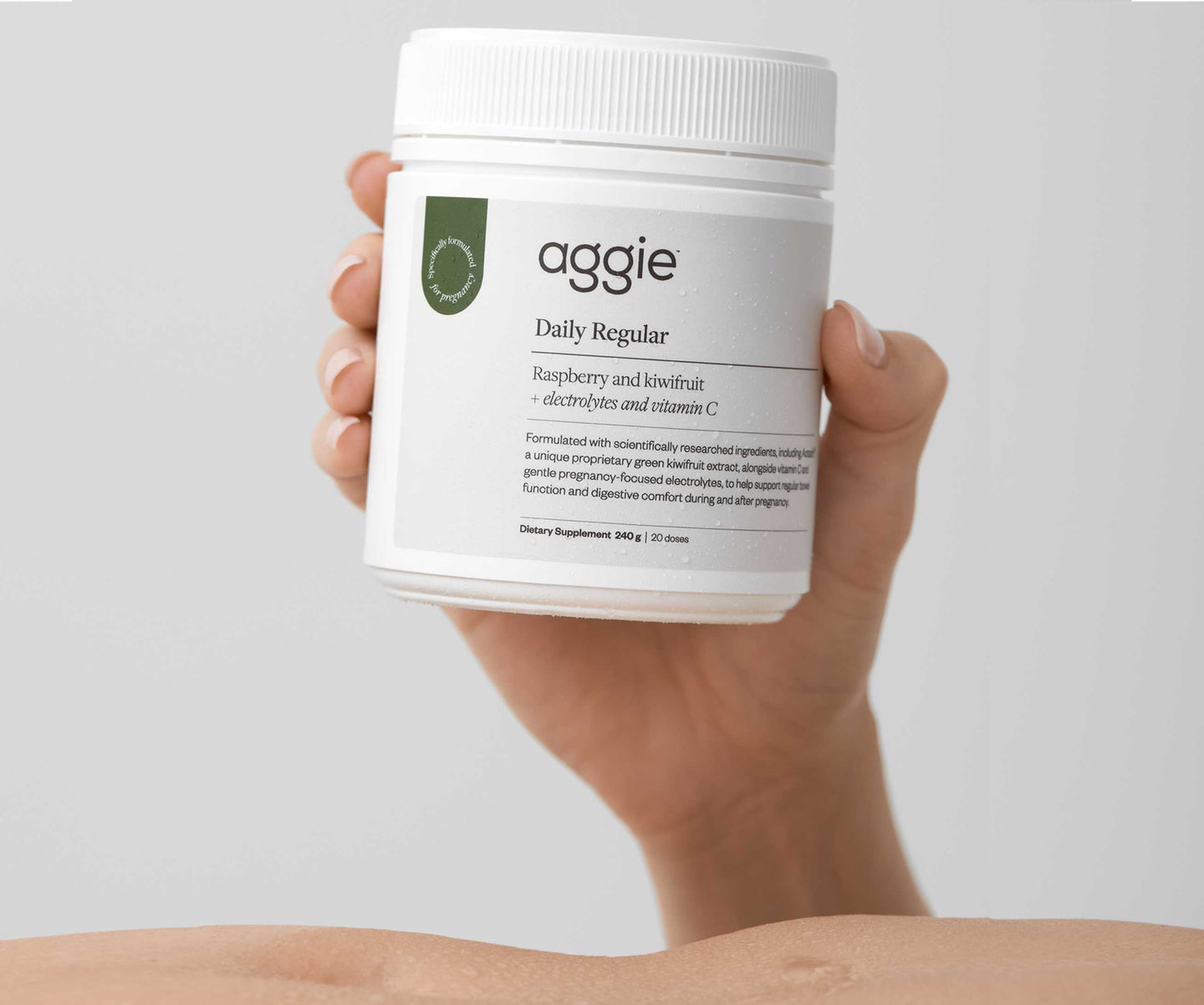
Aggie Daily Regular
Formulated for pregnancy constipation and that first post-birth poo, Daily Regular is a raspberry and kiwifruit drink developed specifically for pregnancy and postpartum bowel health. Developed with PhD nutritionists and made with naturally-sourced ingredients.
- Actazin® clinically studied kiwifruit extract (600mg per serve)
- Vitamin C to support digestive comfort
- Gentle electrolytes to support hydration
- Flavoured and coloured by nature with no artificial nasties
- Just stir one tablespoon into 200ml of water
The combination of fibre, gentle electrolytes, and a clinically studied kiwifruit extract makes Daily Regular a practical daily option for pregnant and postpartum women who want to stay regular without reaching for traditional laxatives.
Toilet habits that actually help
How you go to the toilet matters as much as what you eat. Small adjustments to your bathroom posture and routine can make a significant difference, especially as your bump grows.
- Use a small step or footstool to elevate your feet. This shifts your body into a more natural squatting position, reducing the strain required to pass stool.
- Don't ignore the urge. Go to the toilet as soon as you feel the need. Waiting causes more water to be reabsorbed from stool, making it harder to pass.
- Lean forward with elbows on knees. Keep your back straight and relax your abdominal muscles outward rather than bearing down with force.
- Try sitting on the toilet 20 minutes after meals, particularly breakfast. The gastrocolic reflex (your gut's natural response to eating) is strongest at this time.
- Give yourself time and privacy. Stress and rushing activate your sympathetic nervous system, which suppresses bowel function.
- Breathe slowly and relax your pelvic floor. This is especially helpful in late pregnancy when the bump adds pressure.
What to avoid during pregnancy
Some common constipation treatments that work well outside of pregnancy carry risks when you're expecting. Here's what to steer clear of without explicit guidance from your healthcare provider.
Stimulant laxatives (senna, bisacodyl)
Stimulant laxatives work by triggering intestinal muscle contractions, and that same action amy stimulate uterine contractions. They can also cause dehydration and electrolyte imbalances. Always go with options prescribed by your doctor.
Castor oil
A popular folk remedy, castor oil is not recommended during pregnancy. It can trigger premature labour and cause significant cramping and diarrhoea.
Prolonged use of osmotic laxatives without guidance
Lactulose and polyethylene glycol-based laxatives are generally considered safe in the short term, but extended use without medical supervision may lead to electrolyte imbalances.
High-dose iron supplements (unless prescribed)
Iron is a major contributor to pregnancy constipation. If you're taking iron supplements and struggling, ask your midwife about adjusting the dose, taking it in divided doses throughout the day, or switching to a gentler formulation.
Excess fibre without enough water
More fibre without more water can actually worsen constipation by creating a hard, dry mass. Always increase fluid intake when increasing fibre.
When to see your doctor
Constipation during pregnancy is common, but there are some warning signs that warrant a call to your midwife, GP, or obstetrician sooner rather than later.
- Blood in your stool or rectal bleeding. This can indicate haemorrhoids (common in pregnancy) but should always be assessed by a healthcare provider to rule out other causes.
- Severe abdominal pain or cramping. Constipation can cause discomfort, but severe pain that doesn't resolve, especially when accompanied by bloating or nausea, should be evaluated.
-
Constipation alternating with diarrhoea. This pattern can be a sign of irritable bowel syndrome or another condition that your care team should know about.
No bowel movement for more than one week. While "normal" bowel frequency varies widely, going more than 7 days without a bowel movement during pregnancy warrants a conversation with your healthcare professional.
Frequently asked questions
Is constipation worse in the first or third trimester?
Constipation can occur in any trimester, but it often begins in the first trimester due to the rapid rise in progesterone. It may ease slightly in the second trimester and then worsen again in the third as the growing uterus puts pressure on the bowel.
Is psyllium husk safe in pregnancy?
Yes. Psyllium husk is a bulk-forming fibre that is considered safe during pregnancy and is often recommended as a first-line option. It is not absorbed systemically, so it does not reach the baby. As with all fibre supplementation, take it with plenty of water.
Can constipation affect the baby's development
Typical pregnancy constipation does not directly affect your baby's development. However, it can significantly impact your comfort and wellbeing. Severe or untreated constipation resulting in complications like haemorrhoids or faecal impaction is worth managing proactively.
Does kiwifruit really help with constipation?
Yes. Clinical research supports the use of kiwifruit for improving bowel regularity. It contains both soluble and insoluble fibre, polyphenols, and the enzyme actinidin. Concentrated kiwifruit extract (such as Actazin®) is used in formulations like Aggie's Daily Regular to provide these benefits in a convenient daily supplement.
Will constipation go away after birth?
For most people, constipation eases once hormone levels return to their pre-pregnancy state after birth. However, many women experience constipation in the immediate postpartum period as well, particularly following a caesarean, perineal injury, or if taking pain medication after birth. It's worth preparing with gentle fibre support from the first few days postpartum.
Ready to get things moving?
Daily Regular is formulated specifically for pregnancy and postpartum, with clinically studied kiwifruit extract, vitamin C, and gentle electrolytes.